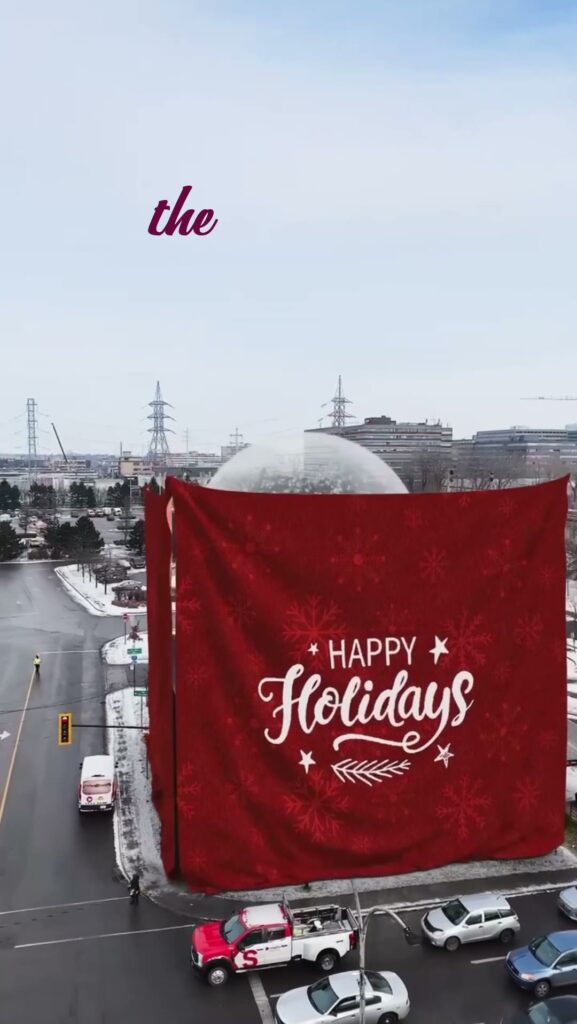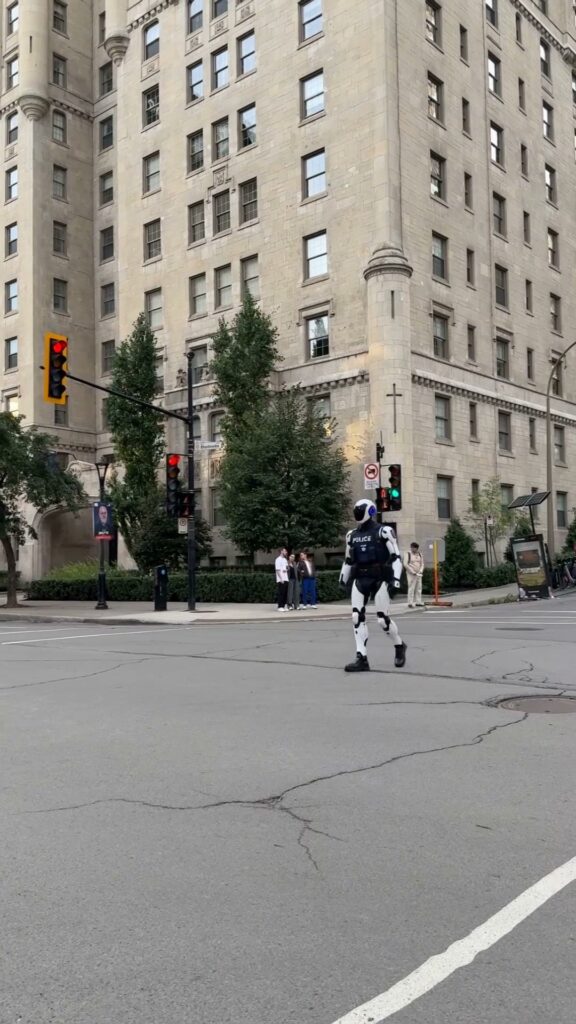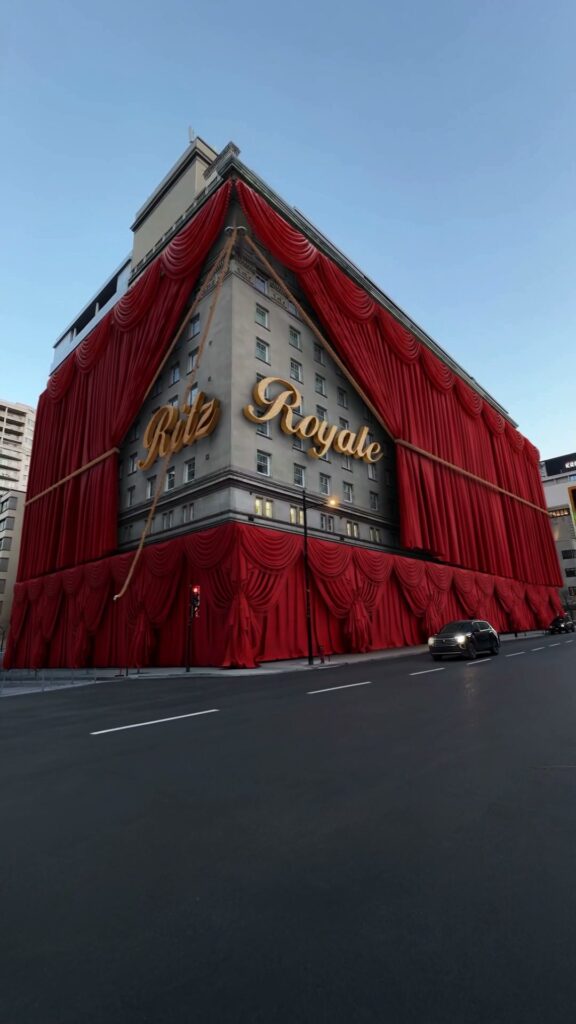
FOOH stands for fake out-of-home. It is a short video, usually vertical, in which a brand appears to have done something enormous in a real place: a mascara wand brushing the lashes of a London Underground train, a handbag the size of a bus driving past a Paris landmark, a robot police officer crossing a Montréal street. None of it happened. The place is real, filmed on a phone. The stunt is CGI. The result lives only on social media, which is the point.
Why it is called “fake” out-of-home
Out-of-home is the advertising industry’s name for billboards, bus wraps, building takeovers and street stunts. FOOH borrows the look of those formats without the permits, the cranes or the six-figure media buy. Because the clip is posted on Instagram, TikTok or Facebook rather than hung on a wall, it reaches people across the world instead of the people who walk past one corner. You will also see it written as faux OOH, digital OOH stunts or simply CGI ads.
How a FOOH ad is made
- The plate. Someone films the real location, often on a phone: ten seconds, steady, daylight. This clip is the world the stunt will live in.
- Tracking. The 3D software works out exactly how the phone moved, so anything added later moves with the street.
- The build. The product, character or object is modelled in 3D, or an existing model is adapted, and placed in the scene.
- Lighting and compositing. The 3D object is lit to match the sun, the shadows and the reflections in the plate. This is the step that separates believable FOOH from obvious CGI.
- Sound. Servo whirs, a rumble, a crowd reaction. Sound is half the illusion on a phone speaker.
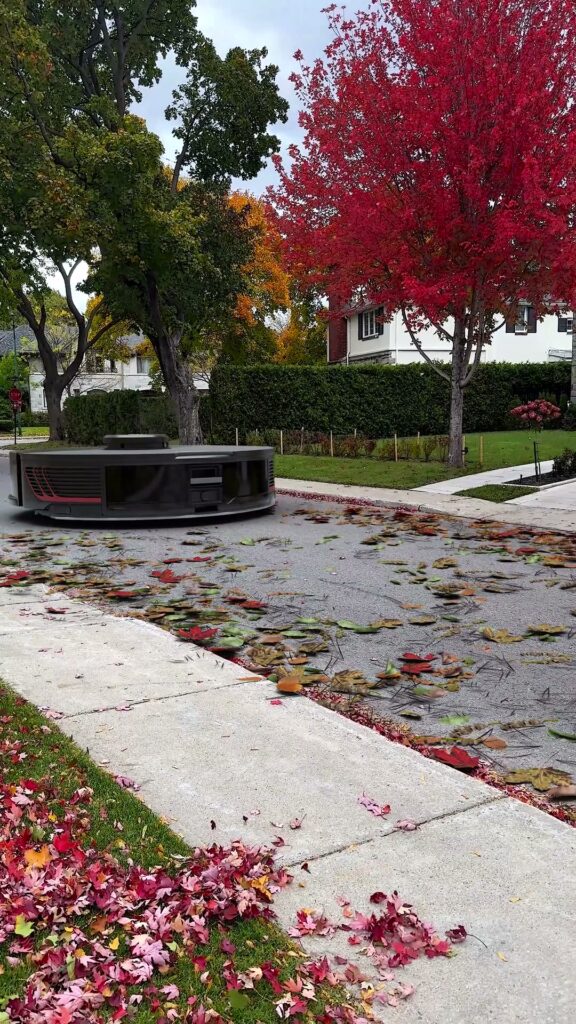
Our own Mont-Royal street sweeper followed exactly this recipe: one phone clip of a quiet street, a giant robot vacuum built in CGI, leaves that react to it, and a payoff at the end. Posted with no media budget, it was seen about 30 million times.
Why FOOH goes viral when normal ads do not
Three things happen in a good FOOH clip. The first second looks real, so people stop. By the third second it is obviously impossible, so they watch to the end to see how far it goes. Then they share it to ask a friend “is this real?”. That question is the engine. In our 30M-view film, 99% of the viewers did not follow the account, and 30,000 of them shared it. A billboard cannot do that.
Famous FOOH examples
- Maybelline, London, 2023. Giant lashes on Tube trains and buses brushed by a mascara wand. The campaign that made FOOH a household term in marketing.
- Jacquemus, Paris, 2023. Le Bambino handbags the size of cars driving through the city. Tens of millions of views and a hundred copycats.
- The North Face, London. Big Ben in an XXXXL puffer jacket.
- Sports Experts, Montréal. Our CGI campaign dropped the store at the foot of a ski mountain, chairlift running, from one clip of the real parking lot. See it here.
What FOOH costs
Studio prices range from about $2,000 to $8,000 for a single-scene clip and $10,000 to $40,000 for a multi-film campaign. Our launch ad is a fixed $2,500 CAD, delivered in two days. The full breakdown is in how much a FOOH ad costs in 2026.
When FOOH is the wrong choice
FOOH works when there is one clear product or idea and a place people recognise. It works less well for services with nothing to show, for messages that need explaining, or when the brand cannot handle “is this real?” comments in its feed. If you need a testimonial or a product demo, a normal film is cheaper and better.
How to brief a FOOH ad
You need three things: the product, the place, and the moment you want to own. “Our energy can, the Old Port, the festival weekend” is a complete brief. A studio should come back within a day with the scene it would build, a storyboard and a fixed price. That is what our brief form does.
LenzVive makes FOOH and CGI ads for brands and agencies worldwide from Montréal.